NobleProg delivers specialized Software Design training in Leon, a hub of industrial and manufacturing excellence. Professionals in this region benefit from expert-led courses designed to enhance technical skills and drive innovation within the local business community.
Delivered either virtually or in person, these instructor-led Software Design courses use interactive discussions and practical exercises to build a solid foundation in the fundamentals of the discipline.
Choose between "online live training" or "onsite live training." Virtual sessions, often referred to as "remote live training," are conducted through an interactive remote desktop. For in-person options, training can be hosted directly at your location in Leon or at NobleProg's corporate facilities in Leon.
NobleProg -- Your Regional Training Partner
Leon - Torre San Mateo
Blvd. Campestre 2502 , Leòn, Mexico
Located in the Golden Zone of Leon Gto.
By public bus
León's public transport is the SIT/Optibús system. The city publishes current route and timetable information through its Mobility Department.
From León Centro: a practical option is to travel toward Terminal San Jerónimo, then continue toward the Campestre area.
Blvd. Campestre is served by local routes; for example, route L-02 runs along Boulevard Campestre and connects with Centro Histórico and San Jerónimo.
For the final part, you may need a short walk from the closest stop to No. 2502.
In this Leon course, teams master Design Thinking to resolve issues through empathy, ideation, and prototyping. With a focus on the Empathize stage, you will align friction points with internal stakeholder needs, converting insights into actionable outcomes through dynamic team activities.
This live training in Leon equips teams and leaders with the Empathize and Define stages of Design Thinking. Participants will master active listening, empathy mapping, and the 5 Whys technique to uncover root causes and draft clear, actionable problem statements for internal clients.
This live, instructor-led training in Leon (online or in-person) is designed for beginner to intermediate-level professionals who want to understand and apply Design Thinking methodologies to drive innovation and improve business solutions.
Upon completing this training, participants will be capable of:
Grasping the fundamental principles of Design Thinking and its impact on innovation.
Applying the five stages of Design Thinking to tackle problems.
Employing ideation techniques and tools to stimulate creativity.
Executing Design Thinking strategies to optimize processes and boost efficiency.
This instructor-led, live training in Leon (online or onsite) is aimed at beginner-level to intermediate-level participants who wish to solve everyday workplace challenges through gamification techniques.
By the end of this training, participants will be able to:
Understand the principles of Design Thinking and its application to problem-solving.
Incorporate gamification techniques to foster engagement and innovation.
Develop creative and practical solutions to common workplace issues.
Collaborate effectively across teams to implement problem-solving strategies.
Apply iterative approaches to refine solutions through feedback and experimentation.
This instructor-led program in Leon empowers senior developers with advanced Domain-Driven Design capabilities. Discover how to leverage strategic and tactical patterns, establish bounded contexts, and weave DDD into Agile workflows to engineer software systems that are resilient, scalable, and easy to maintain.
This instructor-led live training, available both online and onsite, targets intermediate-level developers, architects, and analysts who wish to learn and apply DDD concepts and practices to their software projects.
By the end of this training, participants will be able to:
Understand fundamental DDD concepts, such as bounded contexts and entities, and apply them effectively in software projects.
Apply strategic DDD techniques to define and design domain models, identify subdomains, and establish clear boundaries.
Implement tactical DDD patterns, including CQRS, factories, and event sourcing.
Refactor and modernize legacy systems efficiently using DDD techniques.
Design and implement architectures that are oriented toward products, domains, and teams.
Leverage Data Mesh to build domain-oriented data platforms that support data discovery and governance.
This instructor-led, live training in Leon (online or onsite) is aimed at beginner-level leaders and HR professionals who wish to learn and apply Design Thinking methodologies to foster innovation, enhance problem-solving capabilities, and engage teams effectively.
By the end of this training, participants will be able to:
Equip participants with tools and methodologies to foster innovation and team engagement.
Develop skills in empathy mapping, ideation, and prototyping for solving complex challenges.
Apply Design Thinking principles to leadership and HR scenarios.
Promote a culture of innovation within tech teams.
This instructor-led, live training in Leon (online or onsite) is aimed at intermediate-level Java developers who wish to apply design patterns to improve software structure, maintainability, and scalability.
By the end of this training, participants will be able to:
Understand the purpose and benefits of design patterns.
Apply Creational, Structural, and Behavioral patterns effectively in Java.
Improve code reusability, scalability, and maintainability.
Refactor existing codebases using design patterns.
This instructor-led, live training in Leon (online or onsite) is designed for beginner to intermediate-level software and systems designers seeking a structured and comprehensive grasp of Sparx Enterprise Architect.
By the conclusion of this training, participants will be able to:
Navigate and efficiently utilize Sparx Enterprise Architect, gaining familiarity with its interface and tools.
Model various business structures, such as organization charts, processes, and systems, using different diagrams.
Implement change tracking, version control, and team collaboration strategies within Sparx EA.
Leverage advanced Sparx EA features, including modeling with stereotypes, customization, and task automation.
This 21-hour course on Leon covers critical Kubernetes design patterns for microservices. Learners will master foundational, behavioral, structural, and configuration approaches to engineer resilient, scalable, and cloud-native solutions through guided live-lab exercises.
This instructor-led session on Leon explores both core and advanced principles of software architecture and design. Learners will participate in practical lab exercises, collaborative discussions, and group projects to craft resilient, scalable, and secure software solutions tailored to real-world enterprise challenges.
This live, instructor-led training in Leon (available online or onsite) targets experienced C# developers seeking to architect, build, and secure high-performance .NET applications. The course covers the full lifecycle from requirements analysis and domain modeling to implementing ASP.NET Core APIs, managing data access with Entity Framework Core, tuning performance, and deployment.
Explore Domain-Driven Design to ensure software aligns with business concepts. Gain mastery over strategic and tactical patterns, such as Ubiquitous Language and Bounded Contexts. This Leon training supports teams in handling complexity and constructing flexible, maintainable software architectures.
This 14-hour Design Patterns course in Leon equips you to leverage proven patterns, saving hundreds of hours in design and testing efforts. You will learn to develop organization-specific patterns, evaluate potential cost savings, and systematize your design process through UML and Java-based examples.
In this instructor-led, live workshop training in Leon (online or onsite), participants will learn how to apply the five stages of Design Thinking to better understand the problems experienced by end-users of a product or service, then develop the best approach for resolving them.
By the end of this training, participants will be able to:
Use creative strategies to match customers' needs with technologically feasible solutions.
Formulate a strategy to increase customer value and enhance product and service offerings.
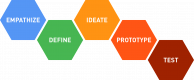
The Design Thinking (DT) process comprises five distinct stages: empathizing, defining the problem, ideating, prototyping, and testing.
In today’s increasingly complex landscape, we encounter challenges that demand specialized approaches. Design Thinking offers a robust framework for navigating these complexities. By mastering Design Thinking, professionals can effectively tackle intricate problems, improve communication, persuade more efficiently, enhance business outcomes, and elevate both organizational dynamics and individual performance.
Understanding DT: Learning from users and the problem at hand, identifying patterns, developing models (including model drift), testing these models, evaluating outcomes, and re-engineering solutions.
Connecting DT with innovation and entrepreneurship.
DT methodologies and tools: personas, stakeholder maps, customer journey maps, service blueprints, and business model innovation.
Practical applications of DT: fostering a design mindset, driving disruptive innovation, utilizing iterative approaches and agile estimation techniques, sharpening critical thinking and problem-solving skills, enhancing teamwork, building leadership readiness, refining communication abilities, cultivating technological fluency, promoting forward-thinking, developing intercultural and ethical competencies, boosting emotional intelligence and self-awareness, mastering negotiation skills, and resolving conflicts.
Objectives:
To grasp the fundamental principles and subtleties of DT.
To explore core concepts, influencing factors, theories, types, and models within DT.
To engage in experimentation, hands-on experience, and practical application of DT.
Delivery Format:
This is a 1-day (4-hour) training course structured as follows:
Lectures (40%): Presentation of theories, concepts, models, and interactive discussions.
Group exercises (30%): Activities focusing on group dynamics, games, group discussions, and simulated conflict resolution.
Individual activities (15%): Tasks involving writing, designing, and peer feedback.
Additional resources (15%): Videos and reading materials.
Note: Due to the interactive nature of this course, a minimum group size of 3 participants is required.
This instructor-led live training in Leon (online or onsite) targets intermediate-level PHP developers who wish to effectively apply design patterns in their projects.
By the conclusion of this training, participants will be able to:
Grasp the purpose and advantages of using design patterns.
Identify and implement suitable design patterns for various common scenarios.
Organize PHP applications according to industry-recognized best practices.
Integrate patterns into modern frameworks like Symfony or Zend.
This live training in Leon explores embedded C design principles, empowering developers to understand reliability, functionality, and logic. The course features hands-on exercises focused on designing error-free applications, optimizing hardware performance, and mastering key concepts such as system constraints, code reusability, and maintainability.
This 14-hour advanced JavaScript course in Leon is designed for developers constructing complex web applications. It delves into object-oriented programming, design patterns, and asynchronous communication techniques such as Promises and RxJS, with a focus on best practices to improve code architecture.
Targeted at experienced programmers, this 21-hour course on Leon examines design patterns and refactoring methodologies. Through hands-on sessions, attendees will master GoF patterns, enterprise architecture concepts, and essential tools to develop high-performance, maintainable PHP applications.
This comprehensive course in Leon delves into RISC-V architecture, assembly, Linux, FPGA, and AI applications. It addresses the global talent shortage by fostering expertise from ISA fundamentals to advanced SoC design, making it ideal for engineers aiming to master modern, open-source computing stacks.
In this live training session held in Leon, participants will delve into the intricate relationship between software, technical, and enterprise architectures. You will learn to navigate the complexities of distributed systems and associated trade-offs, while mastering standard patterns for SOA, microservices, and efficient inter-system communication.
This course in Leon equips developers and architects with the skills necessary for the UML2 Intermediate exam. It explores advanced modeling concepts, classification, and state machines. By mastering these essential design components, you will be prepared to construct detailed UML models and serve as a qualified senior contributor to a UML development team.
Read more...
Last Updated:
Testimonials (6)
Seeing aspects of idea generation, especially during the activity where we first listed bad ideas and then made the list of good ideas. I found it actually helped to get the bad ideas out as it got me into the swing of coming up with ideas, regardless of whether they were good or bad.
William Boscher - Bank Julius Baer Guernsey
Course - Design Thinking: Innovation & Creative Problem Solving
Trainer knowledge, involvement, and rapport
Adam Kuklewski - GE Medical Systems Polska
Course - Technical Architecture and Patterns
complete, subject-focused, with multiple exercises and examples
Grzegorz Sposob - ASSECO POLAND S.A.
Course - OCUP2 UML Certification - Preparing for the UML2 Intermediate exam.
The explanations and interactivity of the trainer, he really brought the subject well; and even-though I was probably not experienced enough, I did learn a lot from it!
Pieter Bruynseels - Spot Buy Center BV
Course - Design Patterns
I liked the exercises that helped to open the mind and gain new insights into software architecture.
Gabriele - EAGLEPROJECTS S.p.A.
Course - Architecture and Design: Core + Advanced Training
I liked the platform we used. It was really nice and easy to use. I liked the typescript section, the part about namespaces and modules.
Online Software Design training in Leon, Software Design training courses in Leon, Weekend Software Design courses in Leon, Evening Software Design training in Leon, Software Design instructor-led in Leon, Software Design classes in Leon, Online Software Design training in Leon, Software Design trainer in Leon, Software Design instructor in Leon, Software Design one on one training in Leon, Software Design private courses in Leon, Software Design instructor-led in Leon, Software Design boot camp in Leon, Software Design on-site in Leon, Evening Software Design courses in Leon, Software Design coaching in Leon, Weekend Software Design training in Leon