Thank you for sending your enquiry! One of our team members will contact you shortly.
Thank you for sending your booking! One of our team members will contact you shortly.
Course Outline
1. AR Foundations and the AR Ecosystem
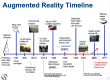
- Introduction to AR: Definition, history, and evolution. Distinctions between VR, AR, and MR (Mixed Reality).
- AR Applications: Industry Overview (E-commerce, Education, Medicine, Gaming, Industrial sectors).
- Key AR Technologies: Tracking – Image Tracking, Plane Detection, World Tracking, 6DOF vs. 3DOF.
- Mobile Ecosystems: Introduction to ARKit (iOS) and ARCore (Android). Exploring their capabilities and limitations.
- Development Environment: Installing Unity and configuring AR Foundation.
- Workshop 1: Setting up your first AR project.
2. Position Tracking and Object Placement
- World Tracking Basics: Horizontal and Vertical Planes (Plane Detection).
- Input Handling: Touch and Gesture Detection. Understanding Raycasting in AR.
- Workshop 2: Placing 3D Objects in the Real World.
- Object Manipulation: Allowing users to scale, rotate, and move placed 3D models.
- Workshop 3: Interacting with Objects. Adding Controllers for Model Manipulation.
- Persistent Anchors: Saving and Loading AR Sessions.
3. Image-Based AR and Animation
- Image Tracking: Principles and creating reference image libraries.
- Workshop 4: Image-Based AR: Detecting a poster/graphic and overlaying a 3D model or video on it.
- Animation and Visual Effects: Incorporating animation into 3D models. Utilizing particle systems in AR.
- Workshop 5: Design Enhancement. Adding animations and simple visual effects.
- Face Tracking and Body Tracking: Introduction to creating filters – operational principles and 3D masks.
4. Advanced Tracking and UX/UI in AR
- 3D Object Tracking: Scanning and using physical objects as markers.
- Occlusion: Making virtual objects appear hidden behind real objects – crucial for realism.
- User Interface (UX/UI) in AR: Design challenges, 3D design, and principles of information placement on the display (HUD).
- Workshop 6: Interface and Instructions: Adding a UI to your project to indicate the need to scan a space.
- AR Cloud and Shared Experiences: Introduction to multi-user AR sessions.
- Performance Optimization: Tips for 3D models, textures, and scripts.
5. Publication, Ethics, and the Future of AR
- Testing AR Apps: Challenges in testing (varying lighting conditions, environments, devices).
- Publishing Apps: Export and publication processes for the Apple App Store and Google Play Store.
- Future trends in AR: WebAR, AR glasses technologies (e.g., HoloLens, Magic Leap), and the potential of Mixed Reality (MR).
- Ethics, Privacy, and Security in AR: Legal and ethical aspects related to scanning user spaces and data handling.
- Final Project: Presentation of participants' completed projects, discussing challenges and lessons learned.
Requirements
- No prior technical knowledge is required
- No previous coding experience is necessary
- Familiarity with markup languages (HTML, XML, etc.) may be beneficial
35 Hours