NobleProg delivers specialized Automotive training in Leon, a hub of industrial and manufacturing excellence. Professionals in this region benefit from expert-led courses designed to enhance technical skills and drive innovation within the local business community.
Delivered either online or on-site, our instructor-led live Automotive training programs guide you through the fundamentals and advanced aspects of Automotive technologies using interactive, hands-on exercises.
We offer these Automotive training programs in both "online live" and "onsite live" formats. Online live training (also known as "remote live training") is conducted through an interactive remote desktop. On-site live training is available locally at your customer premises in Leon or at NobleProg’s corporate training centers in Leon.
NobleProg -- Your Local Training Provider
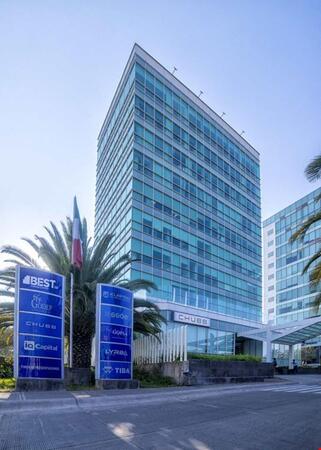
Leon - Torre San Mateo
Blvd. Campestre 2502 , Leòn, Mexico
Located in the Golden Zone of Leon Gto.
By public bus
León's public transport is the SIT/Optibús system. The city publishes current route and timetable information through its Mobility Department.
From León Centro: a practical option is to travel toward Terminal San Jerónimo, then continue toward the Campestre area.
Blvd. Campestre is served by local routes; for example, route L-02 runs along Boulevard Campestre and connects with Centro Histórico and San Jerónimo.
For the final part, you may need a short walk from the closest stop to No. 2502.
This instructor-led, live training in Leon (online or onsite) is aimed at beginner-level professionals who wish to explore the ethical dilemmas and legal frameworks surrounding autonomous vehicles.
By the end of this training, participants will be able to:
Understand the ethical implications of AI-driven decision-making in autonomous vehicles.
Analyze global legal frameworks and policies regulating self-driving cars.
Examine liability and accountability in the event of autonomous vehicle accidents.
Evaluate the balance between innovation and public safety in autonomous driving laws.
Discuss real-world case studies involving ethical dilemmas and legal disputes.
This instructor-led, live training in Leon (online or onsite) is aimed at beginner-level professionals and enthusiasts who wish to understand the fundamental concepts, technologies, and applications of autonomous vehicles.
By the end of this training, participants will be able to:
Understand the key components and working principles of autonomous vehicles.
Explore the role of AI, sensors, and real-time data processing in self-driving systems.
Analyze different levels of vehicle autonomy and their real-world applications.
Examine the ethical, legal, and regulatory aspects of autonomous mobility.
Gain hands-on exposure to autonomous vehicle simulations.
This live, instructor-guided training in Leon (delivered online or onsite) is tailored for intermediate-level network engineers and automotive IoT developers looking to comprehend and implement V2X communication technologies for autonomous vehicles.
By the conclusion of the program, participants will be able to:
Comprehend the essential principles of V2X communication.
Examine the V2V, V2I, V2P, and V2N interaction models.
Apply V2X standards like DSRC and C-V2X.
Construct simulations for connected vehicle ecosystems.
Resolve cybersecurity and privacy issues inherent in V2X networks.
This instructor-led, live training in Leon (online or onsite) is designed for intermediate-level engineers, automotive professionals, and IoT specialists who want to understand the role of sensors in self-driving cars, covering LiDAR, radar, cameras, and sensor fusion techniques.
By the end of this training, participants will be able to:
Understand the different types of sensors used in autonomous vehicles.
Analyze sensor data for real-time vehicle perception and decision-making.
Implement sensor fusion techniques to improve vehicle accuracy and safety.
Optimize sensor placement and calibration for enhanced autonomous driving performance.
This instructor-led, live training in Leon (online or in-person) is designed for safety engineers and automotive safety professionals at an advanced level who want to create comprehensive safety strategies for autonomous vehicles. The program covers hazard analysis, functional safety assessments, and adherence to international standards.
Upon completing this training, participants will be able to:
Identify and evaluate safety risks linked to autonomous driving systems.
Perform hazard analysis and risk assessment using industry standards.
Implement validation and verification methods for AV systems.
Apply functional safety standards, such as ISO 26262 and SOTIF.
Create risk mitigation strategies to address safety challenges in autonomous vehicles.
This instructor-led, live training in Leon (online or onsite) is aimed at advanced-level sensor fusion specialists and AI engineers who wish to develop multi-sensor fusion algorithms and optimize real-time navigation in autonomous systems.
By the end of this training, participants will be able to:
Understand the fundamentals and challenges of multi-sensor data fusion.
Implement sensor fusion algorithms for real-time autonomous navigation.
Integrate data from LiDAR, cameras, and RADAR for perception enhancement.
Analyze and evaluate fusion system performance under various conditions.
Develop practical solutions for sensor noise reduction and data alignment.
This live, instructor-led course in Leon focuses on the design and development of automotive software using AUTOSAR Classic and Adaptive platforms. Learners will acquire practical skills to configure components, integrate ADAS software, and implement safety best practices using industry-standard tools.
This instructor-led, live training in Leon (online or onsite) is aimed at intermediate-level AI developers and computer vision engineers who wish to build robust vision systems for autonomous driving applications.
By the end of this training, participants will be able to:
Understand the fundamental concepts of computer vision in autonomous vehicles.
Implement algorithms for object detection, lane detection, and semantic segmentation.
Integrate vision systems with other autonomous vehicle subsystems.
Apply deep learning techniques for advanced perception tasks.
Evaluate the performance of computer vision models in real-world scenarios.
This instructor-led, live training in Leon (online or onsite) is aimed at intermediate-level automotive engineers and technicians who wish to gain hands-on experience in testing, simulating, and diagnosing ECUs using Vector tools like CANoe and CANape.
By the end of this training, participants will be able to:
Understand the role and function of ECUs in automotive systems.
Set up and configure Vector tools such as CANoe and CANape.
Simulate and test ECU communication on CAN and LIN networks.
Analyze data and perform diagnostics on ECUs.
Create test cases and automate testing workflows.
Calibrate and optimize ECUs using practical approaches.
This live, instructor-led training in Leon (available online or onsite) is designed for advanced robotics engineers and AI researchers aiming to implement complex path planning algorithms to boost autonomous vehicle performance.
Upon completing this training, participants will be equipped to:
Comprehend the theoretical underpinnings of advanced path planning algorithms.
Implement algorithms such as RRT*, A*, and D* for real-time navigation.
Optimize path planning for obstacle avoidance and dynamic environments.
Integrate path planning algorithms with sensor data to enhance accuracy.
Evaluate the performance of different algorithms in practical scenarios.
This instructor-led, live training in Leon (online or onsite) targets intermediate-level automotive engineers and embedded systems developers who wish to understand the theoretical aspects of ECUs, focusing on Vector-based tools and methodologies used in automotive design and development.
By the end of this training, participants will be able to:
Understand the architecture and functions of ECUs in modern vehicles.
Analyze communication protocols used in ECU development.
Explore Vector-based tools and their theoretical applications.
Apply model-based development principles to ECU design.
This instructor-led, live training in Leon (online or onsite) is aimed at intermediate-level professionals who wish to gain a comprehensive understanding of EV powertrain architectures, battery chemistry, battery management systems (BMS), and the factors affecting energy efficiency in electric vehicles.
By the end of this training, participants will be able to:
Understand the structure and function of EV powertrains.
Analyze different battery chemistries and their applications in EVs.
Implement battery management techniques to enhance performance and safety.
Evaluate energy efficiency in various EV configurations.
This instructor-led, live training in Leon (available online or onsite) is designed for advanced-level data scientists, AI specialists, and automotive AI developers seeking to build, train, and optimize AI models for autonomous driving.
By the end of this training, participants will be able to:
Understand the fundamental concepts of AI and deep learning as they apply to autonomous vehicles.
Implement computer vision techniques for real-time object detection and lane tracking.
Apply reinforcement learning to improve decision-making in self-driving systems.
Integrate sensor fusion methods to enhance perception and navigation capabilities.
Construct deep learning models to predict and analyze various driving scenarios.
This instructor-led, live training in Leon (online or onsite) is designed for beginner-level quality engineers who want to learn how to utilize Fundamental Quality Tools to ensure product quality in the manufacturing industry.
By the end of this training, participants will be able to:
Gain insight into the significance and integration of the Fundamental Quality Tools.
Acquire proficiency in the concepts and application of APQP processes to enable effective product quality planning.
Detect potential failures in products and processes, comprehending their impact on quality, and executing actions to reduce risks.
Employ statistical methods to monitor and control manufacturing operations, thereby ensuring both product quality and process efficiency.
This instructor-led, live training in Leon (online or on-site) is designed for quality control professionals at the beginner level who wish to learn the fundamentals of Statistical Process Control (SPC) and apply them to real-world scenarios.
Upon completing this training, participants will be able to:
Grasp the core principles of Statistical Process Control (SPC).
Utilize essential SPC tools, such as control charts, histograms, Pareto charts, and scatter diagrams, to oversee process performance.
Develop and analyze various control charts for both variable and attribute data to identify and assess process variations.
Discover how Machine Learning and Deep Learning are reshaping the automotive industry. This Leon module explores fundamental concepts, spanning from basic automation to autonomous decision-making, while covering neural networks and practical TensorFlow examples for real-world use cases.
The "Automotive SPICE (A-SPICE) - Introduction" workshop focuses on reviewing the Automotive SPICE process assessment model, discussing its structure, classification, and interpretative guidelines. Participants gain skills to understand the assessment process from the perspective of project managers and stakeholders. The course covers the significance of ASPICE in the market, compliance, various process groups, and ASPICE levels through examples of real implementations.
This instructor-led, live training (available online or onsite) is designed for intermediate-level embedded software developers and automotive engineers who want to leverage the AUTOSAR Classic Platform to develop, integrate, and test standardized software components for electronic control units (ECUs).
Upon completing this training, participants will be able to:
Install and configure AUTOSAR development tools (e.g., DaVinci Developer, EB Tresos, or ETAS ISOLAR-A/B).
Grasp the AUTOSAR layered architecture and its basic software (BSW) modules.
Design and implement AUTOSAR OS and communication stack (COM stack).
Utilize CANoe or similar tools for simulation, testing, and diagnostics within an AUTOSAR environment.
This instructor-led, live training (online or onsite) is aimed at intermediate-level embedded software developers or automotive engineers who wish to understand and configure AUTOSAR OS (based on OSEK/VDX) and the COM Stack to enable reliable task scheduling and communication in automotive ECUs.
By the end of this training, participants will be able to:
Grasp the AUTOSAR OS architecture and scheduling policies
Implement and manage tasks, events, alarms, and counters
Describe and configure the COM Stack layers, including PDUR and communication services
Explain protocol stacks (CAN, LIN, FlexRay, Ethernet) and how AUTOSAR interfaces with them
Configure OS and COM modules using industry tools (Vector DaVinci or ETAS ISOLAR)
Simulate and validate task and communication flow in an AUTOSAR-based ECU
This instructor-led training on Leon explores ISO 26262 functional safety for automotive systems. Participants will gain the skills to implement safety processes, grasp ASIL levels, and manage hardware and software compliance to effectively support real-world projects.
This course is designed to empower participants with practical problem-solving skills and methodologies to address complex challenges across various industries. By blending theoretical insights with hands-on exercises, learners will master frameworks such as the 8D Method, 5 Whys, and Ishikawa (Fishbone) Diagram. These tools enable them to pinpoint root causes, formulate effective solutions, and prevent future issues. The curriculum highlights a systematic, data-driven approach, helping participants strengthen their analytical capabilities and foster continuous improvement.
Read more...
Last Updated:
Testimonials (2)
The attention to cover all doubts
Victor Rubio - GDL Circuits
Course - ISO 26262 Automotive Functional Safety
Good expertise of the trainer
Christoph Perret - RENAULT TECHNOLOGIE ROUMANIE S.R.L.
Online Automotive training in Leon, Automotive training courses in Leon, Weekend Automotive courses in Leon, Evening Automotive training in Leon, Automotive instructor-led in Leon, Evening Automotive courses in Leon, Automotive classes in Leon, Automotive one on one training in Leon, Automotive instructor in Leon, Automotive trainer in Leon, Online Automotive training in Leon, Automotive on-site in Leon, Automotive private courses in Leon, Automotive boot camp in Leon, Automotive instructor-led in Leon, Weekend Automotive training in Leon, Automotive coaching in Leon